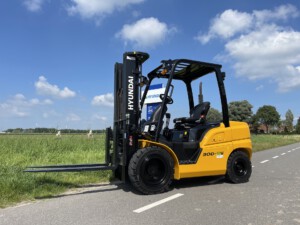
How forklift rental contributes to your Scope 3 emissions goals
Companies are increasingly receiving questions about CO₂ emissions in the supply chain, sustainable use of equipment, and the justification of choices in internal transport. This is precisely where forklift rental Act as a smart role. Not as a trick for reporting, but as a practical way to work more flexibly, more modernly, and often more efficiently.

Contents
- What are Scope 3 emissions?
- Why forklift rental is relevant
- Practical benefits for your ESG goals
- Electric, LPG, or diesel: which is right for your situation?
- From ownership to usage: the asset sharing concept
- Data, insight, and substantiation towards clients
- This is especially interesting for which companies
- Frequently Asked Questions
What are Scope 3 emissions?
Scope 3 emissions are the indirect emissions in the value chain from a company. Consider emissions from purchased goods and services, transportation, waste, business travel, and in many cases, rented assets and operational choices in the supply chain. For many organizations, these emissions are particularly extensive because they fall outside of their direct operations or vehicle fleet.
In practice, this means that companies will increasingly have to explain Why they choose a specific solution, how that choice fits within their operations, and what impact it has on energy consumption, availability, and equipment lifespan. This is relevant for internal transport, especially when companies deal with temporary peaks, multiple locations, or emission-sensitive environments.
Why forklift rental is relevant for more sustainable internal transport
Faster access to more modern equipment
A rental fleet makes it easier to opt for a newer forklift with the right drive, capacity, and battery technology. This means you won't have to keep working with older equipment for as long, which may be less efficient or less suited to your current needs.
2. Less overinvestment and downtime
Those who buy often buy at peak capacity. Those who rent can better adapt to actual needs. This often leads to less idle equipment and a higher utilization rate for machines.
3. Switch to electric earlier
Many companies want to become more sustainable, but don't want to immediately invest in multiple trucks or complete replacement. Renting lowers the barrier to testing electric vehicles or implementing them gradually.
Full service helps prevent hidden emissions from downtime.
Good maintenance, timely inspections, and quick service prevent breakdowns, emergency repairs, and inefficient deployment of other equipment. This is operationally pleasant and also indirectly contributes to a tidier, more predictable business operation.
Not only less emissions, but also smarter use of resources
ESG discussions often go directly to the motor or the battery. That's logical, but the story is broader. A more sustainable forklift strategy is also found in asset sharing, flexibility, and proper configuration. When a machine is only deployed when it's truly needed, its usage aligns better with actual demand. This prevents unnecessary purchases, reduces idle time losses, and avoids using heavy machinery in places where a lighter or electric solution would be more suitable.
This is especially relevant for companies with seasonal peaks, temporary projects, warehouse surges, or changing layouts. In such cases, renting is not only financially attractive but also substantively justifiable as part of a more circular and efficient way of working.
Practical benefits of forklift rental for your ESG goals
Better fitting equipment per location
- Compact electric forklifts for warehouses and indoor use
- LPG for mixed indoor and outdoor use
- Diesel for heavy industrial or outdoor applications
- Less chance of an incorrect or overloaded truck in daily use
Lower threshold for sustainability
- No direct major investment required
- Easier testing of Li-ion or electric alternatives
- Scale up or scale down as your operation changes
- Respond faster to customer or location requirements regarding emissions
More control over uptime
- Maintenance and service can be included in the rental concept
- Fewer unexpected repairs under your own management
- Better employability during peak moments
- Less operational disruption and improvisational solutions
Better story towards client
- Substantiated choice for drive type and deployment duration
- Suitable equipment per project or location
- Flexible provision of temporary capacity
- Professional on-site delivery, inspection, and support
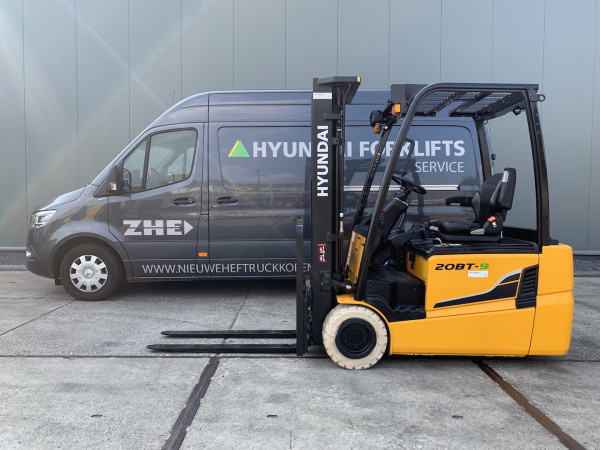
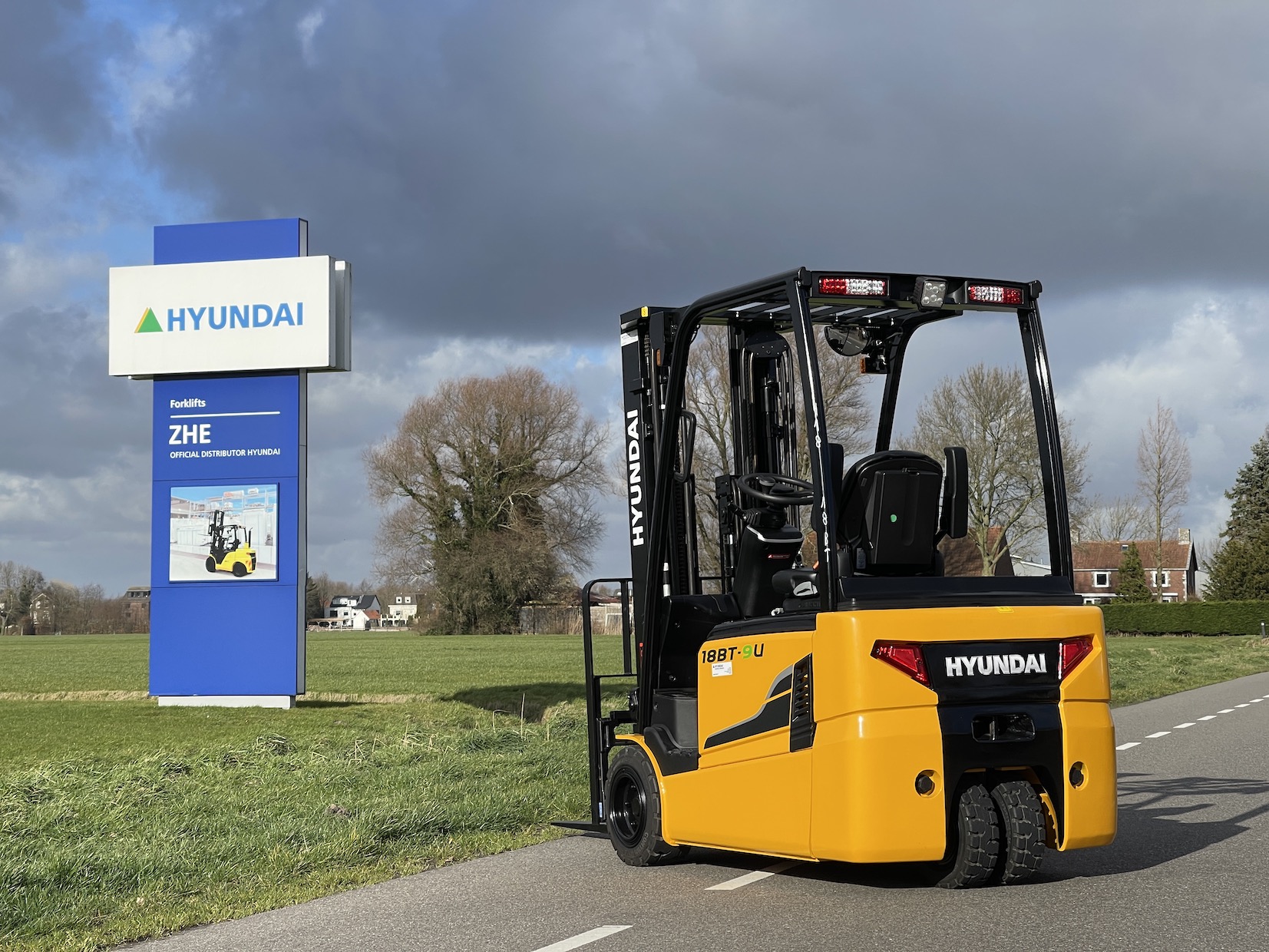
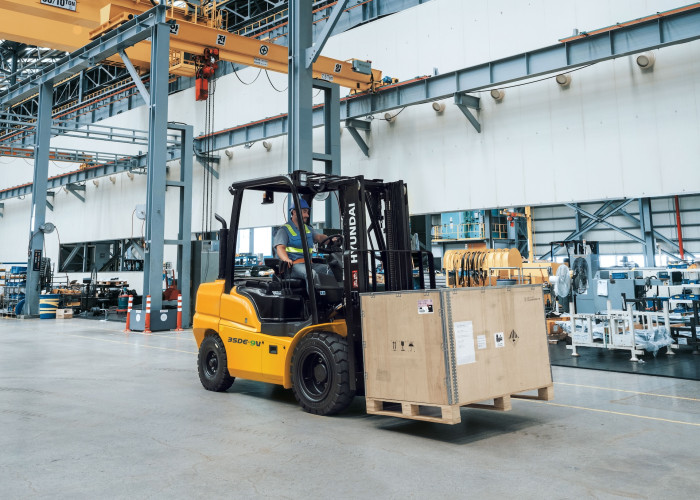
This is what it looks like in practice
Electric, LPG, or diesel: which is right for your situation?
Anyone who takes Scope 3 and more sustainable internal transport seriously shouldn't automatically want to make everything electric. The right choice depends on Utilization, loading moments, floor, environment, peak load, and load type. That is precisely why a practical choice is more important than a general slogan.
| Forklift | When logical | Strengths | More information |
|---|---|---|---|
| Electric forklift | Interior, warehouses, production, emission-sensitive locations | Still, emission-free on location, pleasant driving comfort, interesting for daily use | Electric forklift rental |
| LPG forklift | Mixed indoor and outdoor betting, changing locations, working quickly | Flexible, fast refueling, versatile | Rent an LPG forklift |
| Diesel forklift | Outdoor, heavier loads, port, industry, rougher conditions | Much strength, robust, suitable for heavy and intensive use | Diesel forklift rental |
Thus, for many companies, the profit lies not in one standard solution, but in choosing the correct type of forklift per location or project. This makes the operation more efficient and easier to explain to customers, auditors, or internal sustainability teams.
Are you unsure whether to choose electric, LPG, or diesel?
Please provide your lifting capacity, lifting height, location, and operating hours. Then we will look into which Hyundai forklift best suits your work and your sustainability goals.
From ownership to usage: why the asset sharing concept is becoming increasingly important
In many sectors, the focus is shifting from ownership to usage. This also applies to internal transport. Not every company needs to own every piece of equipment that is only needed temporarily or seasonally. From a circular and operational perspective, this makes sense: a machine that can be used at multiple times and by multiple companies is often utilized more efficiently than a machine that stands idle for a large part of the year.
This does not mean that buying is never smart. For fixed, long-term, and predictable use, buying or leasing can be a good fit. However, for peak demand, project work, test phases, replacement in case of failure, or phased electrification, Forklift rental, precisely the right solution.
Where renting often makes extra sense
- Temporary capacity expansion in warehouse or production
- Seasonal peaks in logistics, trade, or food
- Bridging the delivery of new equipment
- Testing electric deployment or Li-ion in practice
- Project locations with a clear start and end date
Data, insight, and substantiation towards clients
More and more large companies are asking their suppliers and partners to better substantiate choices in the chain. This doesn't always mean you have to submit a complete emissions report directly, but it does mean you can explain Why a solution is logical. Rent helps with this, because you can substantiate per bet:
Which truck was chosen
For example, electric for indoor use, LPG for mixed use, or diesel for heavy outdoor applications.
Why that truck was chosen
Based on lifting capacity, lifting height, usage duration, load moments, ground conditions, and location requirements.
How service and maintenance are arranged
Important for employability, safety, and the prevention of unnecessary downtime.
How flexible the solution is
Scaling up and down without unnecessary overcapacity or extra idle equipment.
This is exactly where a professional rental partner comes in. With Full-service forklift rental it's not just about the machine itself, but also about planning, delivery, maintenance, inspection, and support during its operational life.
For which companies is this extra interesting?
This topic is especially relevant for companies in logistics, distribution, manufacturing, industry, port-related activities, and project-based environments. Especially when there are multiple locations, fluctuating peaks, or stricter client requirements, the choice for internal transport becomes increasingly strategic.
Warehouses and distribution centers
Electric is often interesting due to indoor use, comfort, emission-free on-site deployment, and the ability to smartly combine Li-ion with shift work.
Industrial and outdoor area
Here, LPG and diesel are still often necessary, but in the right configuration and only where it is operationally the best choice.
Project organizations and temporary locations
For temporary deployment, renting is often more logical than buying. You avoid downtime afterwards and choose only the capacity you actually need.
Companies transitioning to electrification
Renting is ideal for testing, gaining experience, and creating internal support before making structural adjustments or investments.
This article is about what renting a forklift means for your own Scope 3 targets. As a supplier, do you receive questions from clients about your internal transport? Then read CSRD and internal transport: what do clients ask of suppliers?
HeftruckHuren.com's Role in a More Sustainable Operation
At HeftruckHuren.com you can choose from 300+ machines in stock, with nationwide delivery, 10+ service and rental locations and support during the rental period. You can choose from:
- Electric forklifts from 1.5 to 18 tonnes for quiet, emission-free, and powerful internal transport
- LPG forklifts from 1.5 to 5 tons for flexible indoor and outdoor use
- Diesel forklifts from 2.5 to 30 tons for heavy-duty outdoor applications, industry, and freight handling
In doing so, we not only look at availability, but also at what best suits your application. Consider lifting capacity, lifting height, battery choice, charging moments, ground conditions, hours of operation, attachments, and location requirements. This way, you not only get a truck quickly, but above all a solution that makes sense for your operation.
Frequently Asked Questions about Scope 3 and Forklift Rental
Does a rented forklift always fall under Scope 3?
This depends on the reporting method, the contract form, and how your organization classifies leased or rented assets. In practice, it is primarily important that you can substantiate the use of rented equipment within your broader sustainability policy and value chain analysis.
Is renting electric always more sustainable than LPG or diesel?
Not automatically. Electric [vehicles] are often very strong for indoor use and emission-sensitive locations, but the best choice depends on operating hours, charging infrastructure, peak load, workspace, and type of load. The most sustainable choice is usually the truck that truly fits technically and operationally.
How does renting help with client ESG or CSRD questions?
Renting helps by allowing you to more flexibly choose suitable equipment, to transition to sustainability more quickly, to maintain less overcapacity, and to better justify why a particular truck is deployed at a specific location.
Can I first test if an electric forklift is a good fit for us?
Yes. That's precisely why renting is interesting. You can assess in practice how electric driving, battery technology, charging times, and deployment hours play out at your location, without being immediately committed to a full replacement or purchase.
Can service, maintenance, and inspection be included in the rental concept?
Yes, especially for longer or full-service programs. This gives you more control over deployability, safety, and predictable operational costs. Also, check our page about Service & Maintenance.
Would you like to organize your internal transport smarter and more future-proof?
Tell us what you move, where you work, and how many hours you operate. Then we will advise which Hyundai forklift fits your operation, your location, and your sustainability ambitions.
Forklift overview
Need a forklift yourself?
Request a no-obligation quote — you will receive a competitive rental price tailored to your needs.