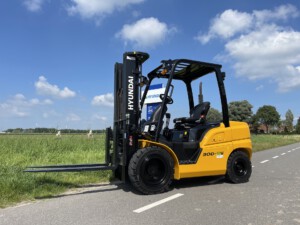
Driving a forklift outdoors is different from working on a smooth warehouse floor. As soon as rain, mud, cobblestones, speed bumps, cold, or slopes come into play, the way a truck behaves also changes. That's why a forklift rental Custom work for outdoor projects.
Why outdoor work requires extra attention
On a flat, dry floor, many conditions are predictable. Outside, they are not. The surface changes, grip varies, and the driver's visibility and comfort suddenly play a much larger role.
- Wet or slippery surfaces reduce grip.;
- Potholes and uneven terrain require more stability;
- Cold, rain, and wind affect visibility and comfort.;
- Sills and inclines change the driving experience under load.
Which drive fits best?
For outdoor work, diesel is often the first consideration. This makes sense: diesel remains strong at higher power outputs, for heavy loads, and for extended outdoor use. On outdoor sites, in industry, and at project locations, this is often a very practical choice.
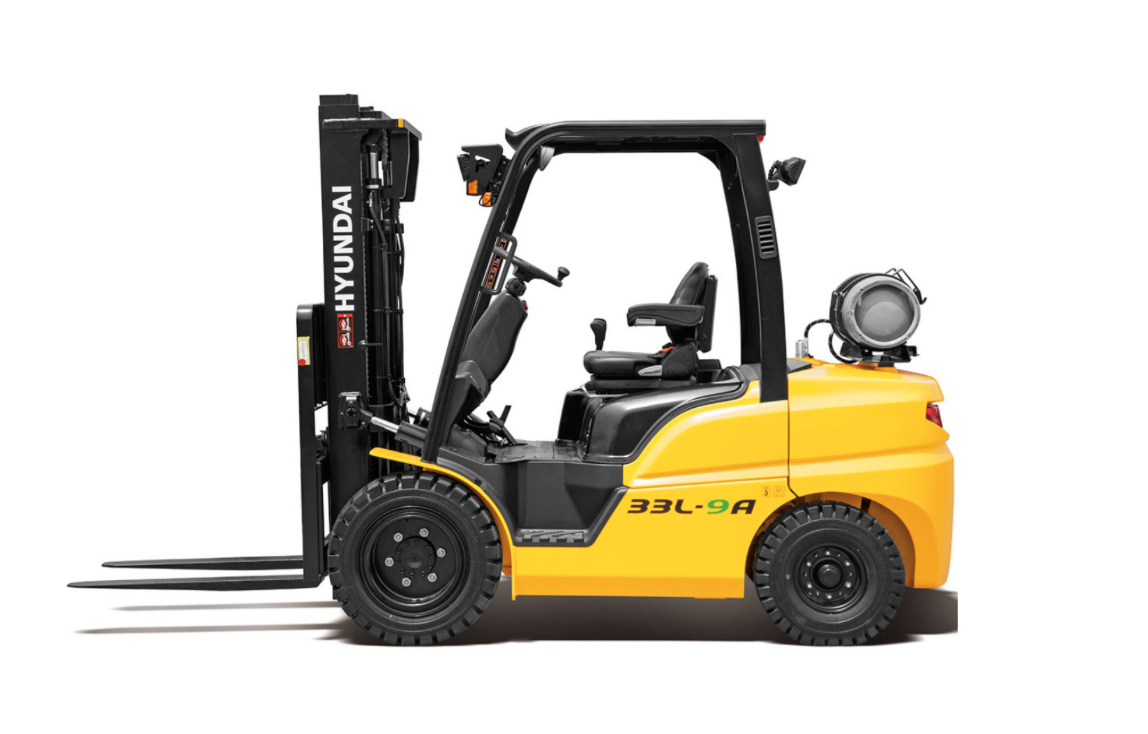
Do you work partly outdoors and partly indoors? Then LPG might be attractive. You benefit from quick refuels and great flexibility in mixed use. For this, also explore the possibilities concerning Rent a Hyundai forklift.
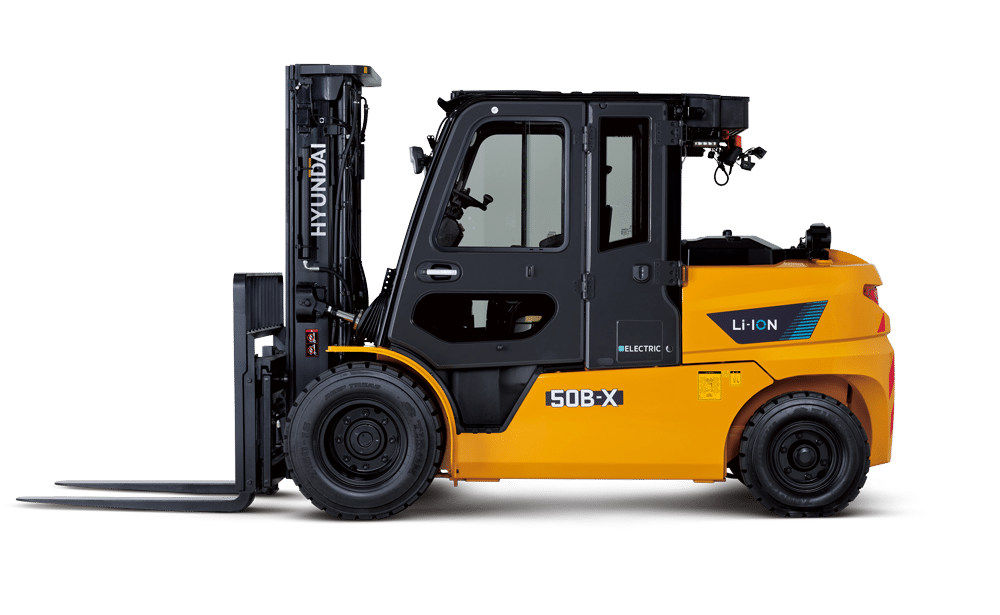
Electricity can also work well outdoors, provided the terrain is paved and the application is correct. For modern, paved outdoor areas or combined use, this can still be a smart route. More information about the product range can also be found at Hyundai Material Handling Europe.

Tires often make the difference outdoors
Many companies focus on tonnage first and then forget about the tires. Yet, it's tires that determine grip, safety, and wear. On wet cobblestones or an uneven yard, the wrong tire choice can be immediately noticeable in traction and stability.
That's why it's smart to also look at the page about The right tires for forklift rental.
Visibility, lighting, and cabin
Outdoor work in rain, dark hours, or cold also requires attention to visibility and comfort. Consider good work lighting, a cabin or half-cabin, and smart safety applications like Blue Spot or Red Zone. This can make a significant difference, especially on busy yards or sites with cross-traffic.
Also see: Blue Spot and Red Zone when renting a forklift.
Always provide slopes and substrate information.
A load that is not a problem on flat terrain may suddenly feel very different on a slope or slippery patch. Therefore, when making your request, please mention not only the weight, but also:
- substratum type;
- ramps or thresholds;
- indoor/outdoor or full outdoor;
- longest route or distances;
- weather-sensitive conditions;
- any additional options such as a cabin or lighting.
Inspection and safety remain crucial
For outdoor work, the same necessity applies to safe and well-maintained equipment. You can read more about this on the website of VA-certified and on the Arbortal.
Is diesel always the best choice for outdoor work?
No. Diesel is often strong for heavier outdoor use, but LPG or electric can be smarter in certain situations. That depends on terrain, load, and indoor/outdoor combination.
Why are tires so important?
Because tires have a significant impact on grip, stability, and wear. This makes a big difference in practice, especially on wet, slippery, or uneven surfaces.
Can I also get advice on transport to the location?
Yes, read that too how the transport of a rental forklift works.
Need a forklift for outdoor work?
Provide your terrain, weight, lifting height, and usage conditions directly. This will allow for more targeted advice on which truck, tires, and configuration will best fit.