Blue Spot & Red Zone on forklift rental: more visibility, fewer collisions
In warehouses, shipping, and production are dead angles en crossings the biggest risk areas. With Blue Spot (projection) and/or Red Zone (safety zone) you increase the forklift's visibility and reduce the chance of collisions — especially with heavy internal transport.
Why safety lighting for forklift rental often makes the difference
You don't always hear a forklift approaching (especially electric ones), and you don't always see it in time due to shelving, corners, goods, and height differences. Blue Spot en Red Zone are simple, yet incredibly effective tools to increase forklift visibility. At HeftruckHuren.com, we can incorporate this directly into your rental configuration (tailored to your routes and risk zones).
More visibility
Projection warns before sound in crowded halls
Less risk
clear safety zone around the truck (pedestrians)
Rest on the floor
fewer “scare moments” at intersections and docks
VA-certificate: our machines come standard with VA-certified (safe and ready for deployment).
1) What is Blue Spot (and why does it work so well)?
Blue Spot is a powerful LED projection that projects a clear “spot” on the floor in front of (and/or behind) the forklift truck. The advantage: people see the forklift truck approaching sooner, even if the truck is behind racks, pallets, or a corner.
Where Blue Spot yields the most
- Crossings in warehouses and production routes
- aisles with shelves or high loads (limited visibility)
- docks with continuous traffic
- environments with a lot of ambient noise (honking is muffled)
2) What is Red Zone (safety zone) and when is it smart?
Red Zone projects a (red) zone next to and/or around the forklift indicating: “stay out of this zone”. This is especially helpful in locations where pedestrians and forklifts work in close proximity.
Typical situations
- many pedestrians along the driving routes (order picking/retail/fruit and vegetables)
- narrow passages or temporary walkways
- work with large/oversized loads or limited maneuvering space
- cramped dock zones where multiple parties work simultaneously
Practical tip: Combine Red Zone with a clear floor layout (walkways, mirrors, and signage).
3) Blue Spot, Red Zone - both? (quick choice helper)
Use these rules of thumb to quickly make the right choice:
Especially Blue Spot as…
- visibility is often lost due to corners, shelves, pallets, or machines
- you have many intersections with forklift traffic
- the ambient noise is high (horn less effective)
Especially Red Zone as…
- pedestrians and forklifts working in close proximity
- routes are small and difficult to avoid
- you want clear boundaries (keep your distance)
Choose both as…
- you have many intersections/blind spots and pedestrians in the same zones
- The workplace is busy (multiple trucks, a lot of movement)
- you want to minimize risks during peak times or temporary deployment
4) Where on the workshop floor does emergency lighting work best?
If you want maximum impact, focus on the places where “unexpected” interactions occur: intersections, exits, docks, doors, and zones with changing traffic patterns.
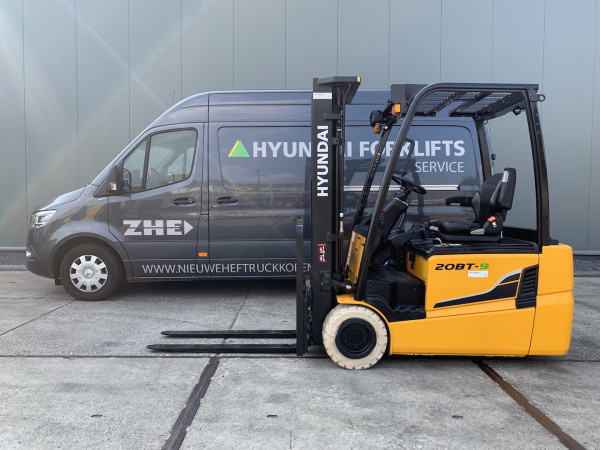
Checklist: This is what we need to deliver Blue Spot/Red Zone correctly from the start.
The better the input, the faster you'll receive the right forklift + options. Copy and paste this into your request:
- Location & Start Date: Where and when does the forklift need to be there?
- Bet indoors/outdoors, routes, intersections, docks, pedestrian zones
- Last & Capacity heaviest load (kg) + pallet/load type
- Stack height lifting height / maximum lifting height
- Truck type electric / LPG / diesel (or “advice needed”)
- Options: Blue Spot (front/rear), Red Zone (side), extra lighting
6) Frequently Asked Questions (Blue Spot & Red Zone when renting)
Is Blue Spot mandatory?
Does Red Zone work in a busy warehouse?
Can this be used on electric, LPG, and diesel forklifts?
Will the forklift be delivered with an inspection?
Ready to start safely? Ask for advice via contact or view all forklifts.