Blue Spot & Red Zone: How to Make Your Warehouse Immediately Safer with Forklift Warning Lights
Blind spots and intersections remain a risk, especially when there is a lot of pedestrian and pallet traffic. That is why more and more companies are opting for Blue Spot (projectile light) and/or Red Zone (safety zone). Moreover, it's a quick upgrade: you increase visibility while still being able to maintain your existing work practices.
Please note: safety lighting is not a “get out of jail free” card. It works best in combination with clear escape routes, speed, and instruction. Therefore, you will find a compact approach below that you can apply immediately.
1) What is Blue Spot and what is Red Zone?
Blue Spot is a bright spot of light on the floor (usually in front of or behind the forklift). This allows pedestrians to see the forklift approaching sooner, even when the vehicle is coming from behind a rack or around a corner. Red Zone projects a “zone” next to or around the truck. This makes it clear at a glance: You should stay away from here..
Especially effective at intersections, aisle exits, and busy docks. Furthermore, it helps in noisy environments where horns are less noticeable.
Ideal when pedestrians walk close to driving routes. It's also useful in order picking zones, as people often cross there “real quick.”.
2) When is emergency lighting most effective?
Not every location has the same risks. Yet, in practice, you see a few recurring situations where lighting has a direct impact. For example, in narrow aisles, blind corners, and areas where inbound and outbound traffic mixes.
| Situation | Best choice | Why |
|---|---|---|
| Intersections / T-junctions / blind spots | Blue Spot | Warn before the forklift is visible |
| Pedestrians along parade routes | Red Zone | Makes safe distance directly visible |
| Busy docks and staging zones | Combi | Extra clarity with a lot of movement |
| Evening/dark zones (shelters, outdoors) | Combi + good work lighting | Better visibility and fewer startled reactions |
Practical tip
First, measure where your near misses happen (intersection, walkway, dock). Then, choose lighting targeted per zone. This way, you avoid getting “too many” signals everywhere, which actually dulls the senses.
3) This is how you implement it correctly (without it becoming a 3-month project)
Start small and measurable. Then expand to the next risk area. At the same time, it's wise to link it to your existing warehouse rules so that everyone works the same way.
Checklist (10 points)
- Choose 1–2 hotspots (crossing/docking) and start there.
- Plan routes with floor markings and clear crossings.
- Limit speed in zones with pedestrians (and communicate that).
- Test light positionfront/rear (Blue Spot) and sides (Red Zone).
- Check sightlinesMirrors/windows clean, shelf angles clear, good lighting.
- Make appointments Use of horn/priority at intersections.
- Instruct drivers (short toolbox: “What does this light mean?”).
- Let pedestrians participateWhere do they cross and why?
- Evaluate after 2 weeks (near misses, feedback, adjustments).
- Then scale up to the next zone.
Would you like to take a broader approach? Then check out our page about working safely with a rental forklift.
4) Rent a forklift with Blue Spot/Red Zone: Here's how we arrange it
Safety lighting is often an option, depending on the model and application. Therefore, we will first assess your workspace (walking routes, intersections, operating hours, and location). Next, we will deliver a suitable truck, including an explanation upon delivery. Finally, for longer rental periods, you can also optimize during the rental.
Which Hyundai models are often a good fit for this?
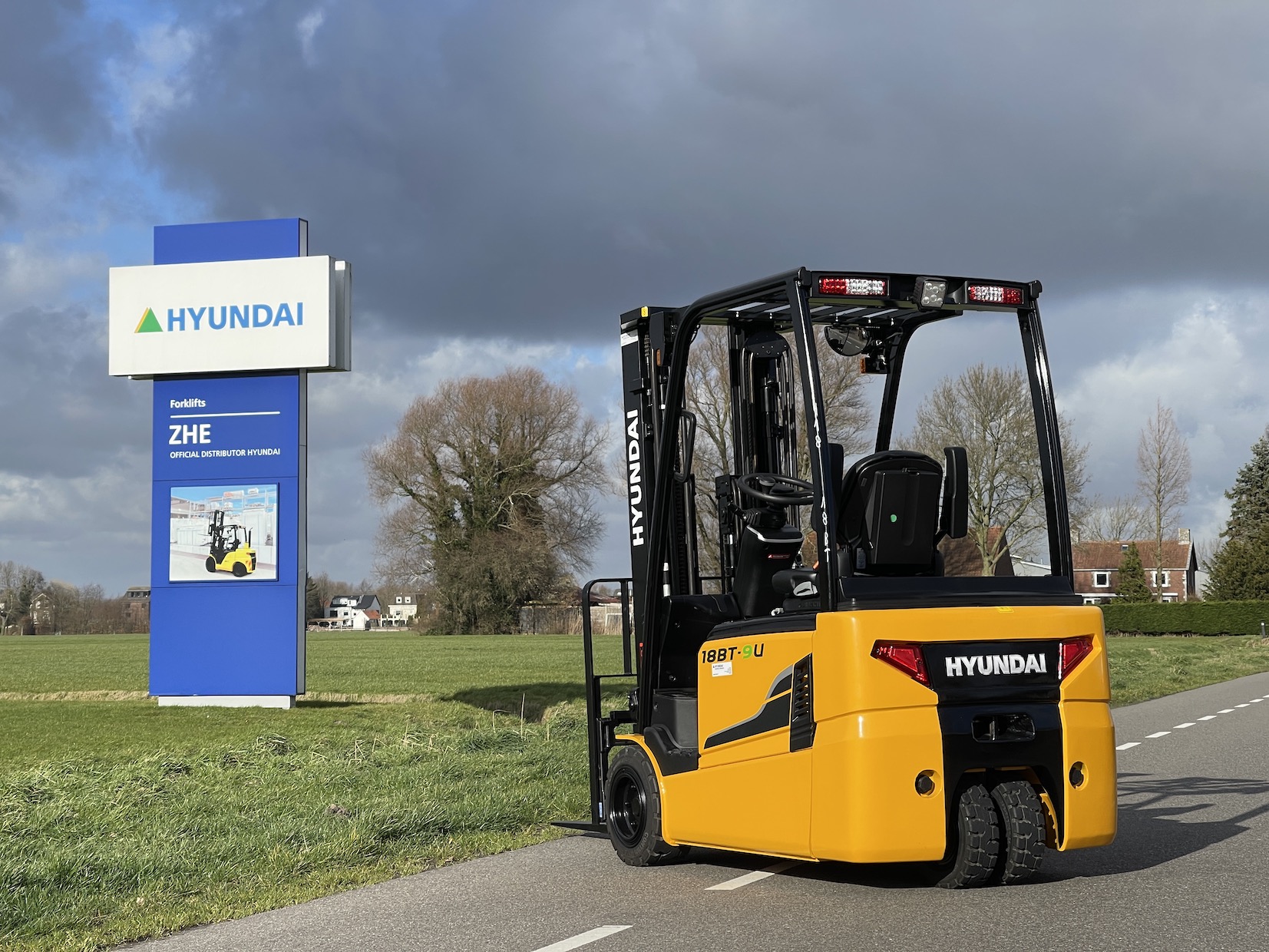
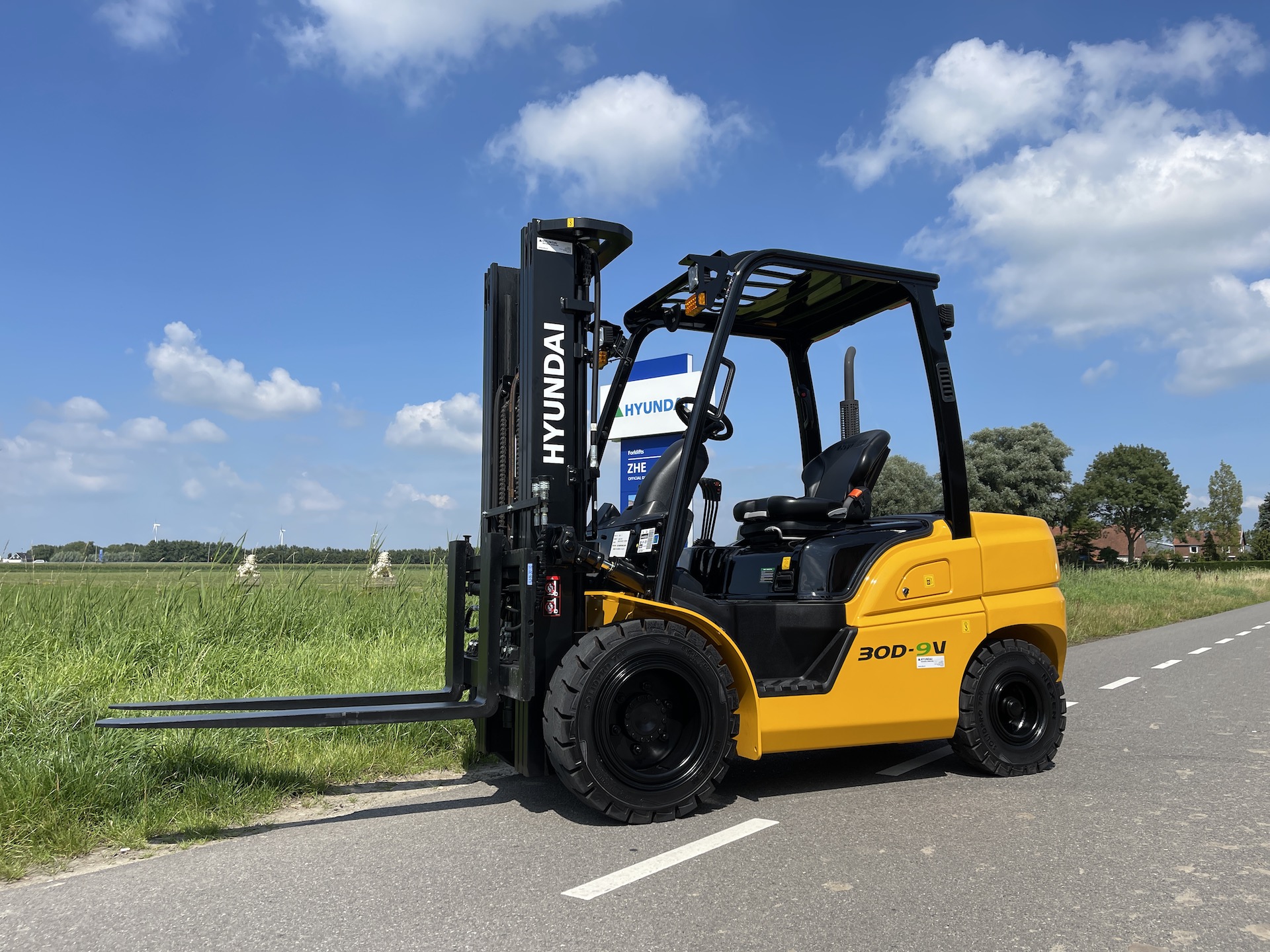
In warehouses, you typically see electric models because they are quiet and emission-free. Additionally, they are pleasant for intensive routes. Nevertheless, deployment remains paramount: a narrow aisle requires something different than an outdoor area.
Quick match
- Narrow hallways / many turns: Compact electric (3-wheel) with Blue Spot.
- All-round warehouse: 4-wheel electric with Blue Spot + (optional) Red Zone.
- Many pedestrians along the route Red zone on both sides.
- Mixed indoor/outdoor: Consultation: LPG or electric with suitable tires/lighting.
Need more help choosing? Also use: Decision guide in 5 steps.
Frequently Asked Questions
Is the Blue Spot or Red Zone mandatory?
No, usually not. However, it can be a smart measure in places with blind spots or a lot of pedestrians. Furthermore, it fits well within a comprehensive plan with walking routes, speed, and instructions.
Does this also work outside?
In many cases, yes, although ambient light and the underlying surface play a role. That's why we assess the location together and choose the best configuration.
Can I get a rental forklift with these options?
Yes, that's often possible (depending on the model and availability). Please specify the following in your request: deployment location, routes, pedestrian zones, and desired rental period.
What do you need for a quick quote?
Lifting capacity, lifting height, daily operating hours, indoor/outdoor, ground surface, location, and rental period. Additionally, it would be helpful if you indicate where the “risk crossing” is. Call directly: 0168 467 467.
Ready to make your workplace safer?
In short: Blue Spot and Red Zone work best when used strategically. That's why we help you with the right rental forklift, options, and planning.
Internal links: homepage • forklift rental • working safely • Options & Accessories
Optional: Hyundai brochures with safety features: BE-X brochure • 15/18/20BT-9U brochure