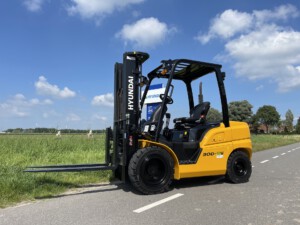
The transition to lithium-ion is often sold as a technical upgrade. But for many companies, the real profit lies elsewhere: in more deployable hours, load faster, less battery maintenance and a workspace that suffers less from charging interruptions. This can make a big difference, especially in warehousing and logistics.
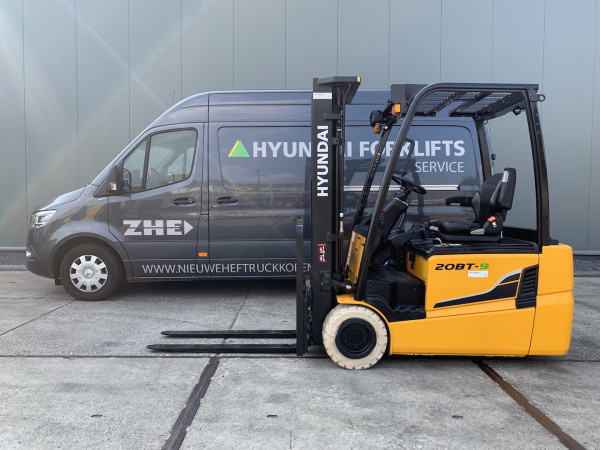
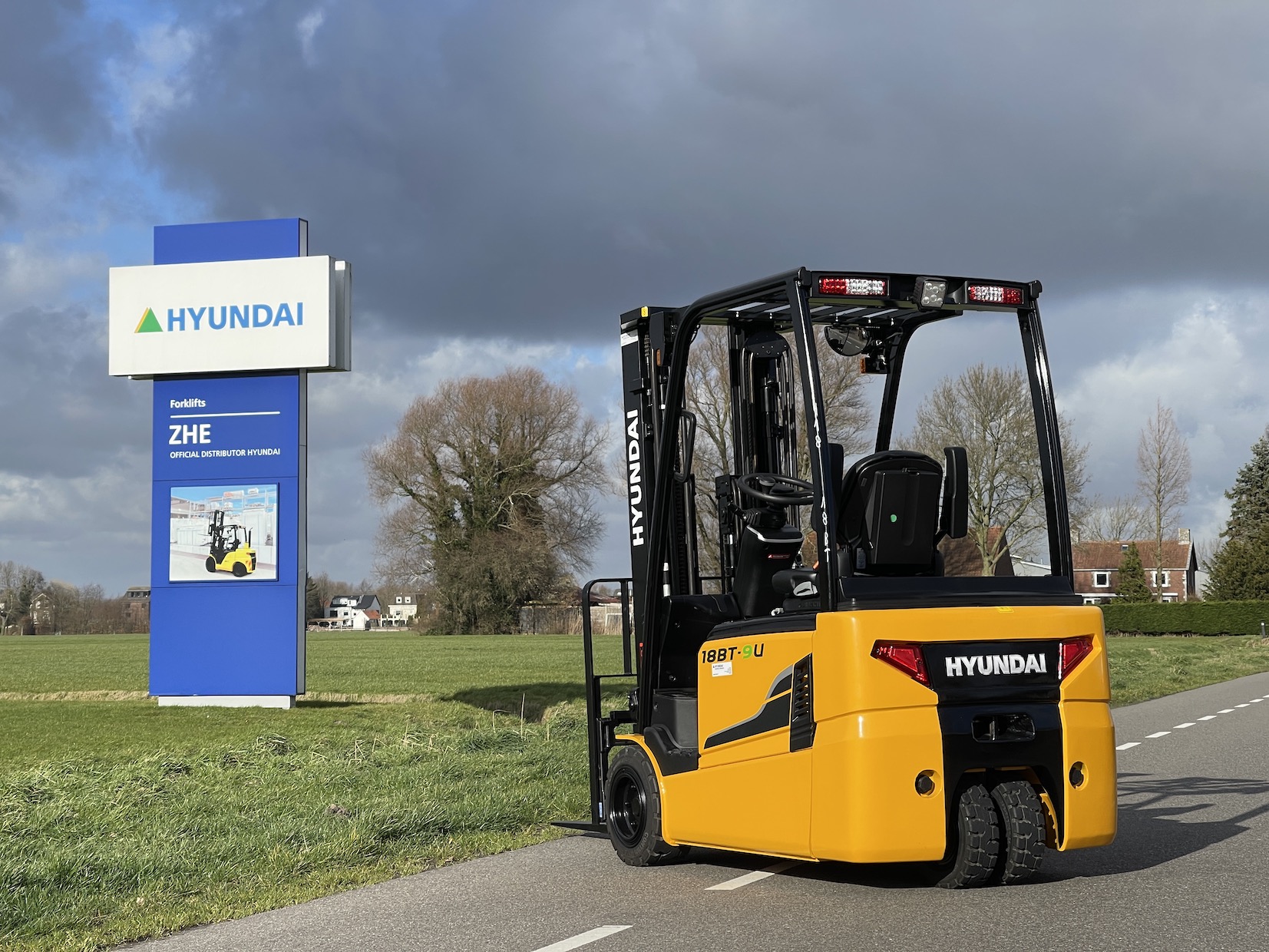

Many companies are looking for an answer to the question: “What do I save with lithium-ion?” They immediately think of electricity consumption. That makes sense, but it's often not the most important factor. The biggest savings usually come from a combination of three things: Reduced loading time, more availability en fewer daily tasks around battery management.
Official manufacturers highlight lithium-ion for forklifts precisely in those areas as strengths: faster charging, opportunity charging, less maintenance, and higher truck availability. This makes lithium-ion particularly interesting in environments where a forklift cannot simply be parked in a corner for hours of charging but needs to keep moving.
Anyone working with electric forklifts will automatically deal with charging routines, charging space, and truck availability. With lithium-ion, that charging strategy is more flexible. Intermediate charging during short breaks or natural downtime is precisely a big advantage, as it makes the truck available again more quickly. Hyundai explicitly mentions “fast and intermittent charging” for its Li-ion ready 9U series, and Toyota cites fast charging capabilities and higher efficiency as key benefits of lithium-ion batteries for material handling.
In practice, that often means:
The truck needs to be out of service for a long period less often.
Short breaks can be valuable even on a busy workday.
The operation doesn't need to be built around battery changes or long charging times quite as rigidly.
A simpler loading process often means less interruption for planners and operators.
For most companies, downtime is more expensive than electricity. As soon as a forklift is not running, it slows down order processing, internal transport, or production. That's why downtime is usually the biggest factor in the business case. Linde explicitly describes lithium-ion as a technology that increases truck availability and makes deployment more economical. Toyota and Hyundai also emphasize less downtime and higher performance in daily use. :contentReference[oaicite:3]{index=3}
| Factor | With traditional battery pressure | Why lithium-ion often helps |
|---|---|---|
| Short peak load | The truck sometimes needs to be available sooner than the loading schedule allows. | Opportunity charging makes interim charging more usable |
| Multiple shifts | Higher chance of logistical hassle around loading or switching | Faster loading helps keep the truck available longer |
| Busy warehouse moments | AccuStatus is quickly becoming an operational problem | Fewer interruptions and more flexibility in use |
| Limited cargo space | Charging planning is quickly becoming a bottleneck | Less hassle around changes and easier deployment |
That's why it's smart to evaluate lithium-ion not just on the battery itself, but especially on how much peace and productivity it adds to your daily logistics.
Another advantage that is repeatedly mentioned in official documentation is that lithium-ion batteries require significantly less daily maintenance in practice. For example, Hyundai calls its Li-ion batteries “practically maintenance-free.” Toyota also mentions less servicing, and Linde associates lithium-ion with simpler handling and higher availability.
Less manual hassle on the work floor makes planning and execution easier.
The fewer separate actions, the smaller the chance of unnecessary disruption or misuse.
Operators and team leaders can focus more on logistics instead of battery management.
Lithium-ion is particularly strong when your forklifts play a real role in the pace of operations. This applies, for example, to warehouses with a lot of daily pallet movements, distribution centers, production sites, and companies with peak times or multiple shifts.
Imagine a warehouse operating all day, with peaks in receiving, internal transport, and order processing. In such scenarios, it's not just about how much electricity a forklift uses, but more importantly, whether it can keep going. In these types of places, the switch to lithium-ion often feels immediately practical:
Faster loading and easier use keep the truck available more often.
Fewer battery swaps and less rigid charging windows lead to more peace in planning.
Downtime, searching, waiting, and disruptions are often more expensive than just the energy bill.
A truck that fits more smoothly into the process simply makes daily work more pleasant.
Provide your operating hours, load moments, and work environment. Then we will advise which electric Hyundai forklift and battery solution best fits your operation.
Whatever battery technology you choose, safe and professional use remains paramount. That is why it is important that your machine is properly checked, delivered neatly, and suitable for deployment on location. At HeftruckHuren.com, VA quality standard. VA-keur describes itself as the hallmark for safe work equipment and indicates that recognized inspection companies work in a certified manner with expert inspectors.
At HeftruckHuren.com, we don't just look at which truck is available, but primarily at which solution best fits your application. Consider lifting capacity, operating hours, load moments, aisle width, floor load, and whether you are primarily seeking operational tranquility or maximum deployability. The site positions itself with 300+ machines in stock, 10+ service and rental locations, and nationwide support, featuring electric forklifts up to 16 tons. :contentReference[oaicite:6]{index=6}
Electric forklifts for daily internal transport, order processing, and pallet handling.
Full service rental for businesses that value uptime and predictability.
Service & Maintenance for support during the rental period.
Sometimes yes, but in many cases the biggest gains are in less downtime, faster loading, less battery management, and a truck that is more often available on the work floor.
Because downtime directly affects productivity, lead time, and staff deployment. A truck that isn't moving often costs more than just a little extra energy.
Yes, especially for warehouses and logistics environments where trucks are used intensively and interim charging opportunities can be smartly utilized.
Official manufacturers describe lithium-ion for forklifts as lower maintenance or practically maintenance-free in daily use, making battery management simpler.
Yes. Based on your operating hours, charging times, peak loads, and work floor, we can advise on which electric forklift and battery solution is the best fit.
We are happy to help you find the right electric Hyundai forklift for your warehouse, distribution, or production environment. We look not only at the truck itself, but at the total deployment: loading, usage, maintenance, and uptime.