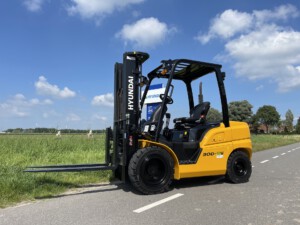
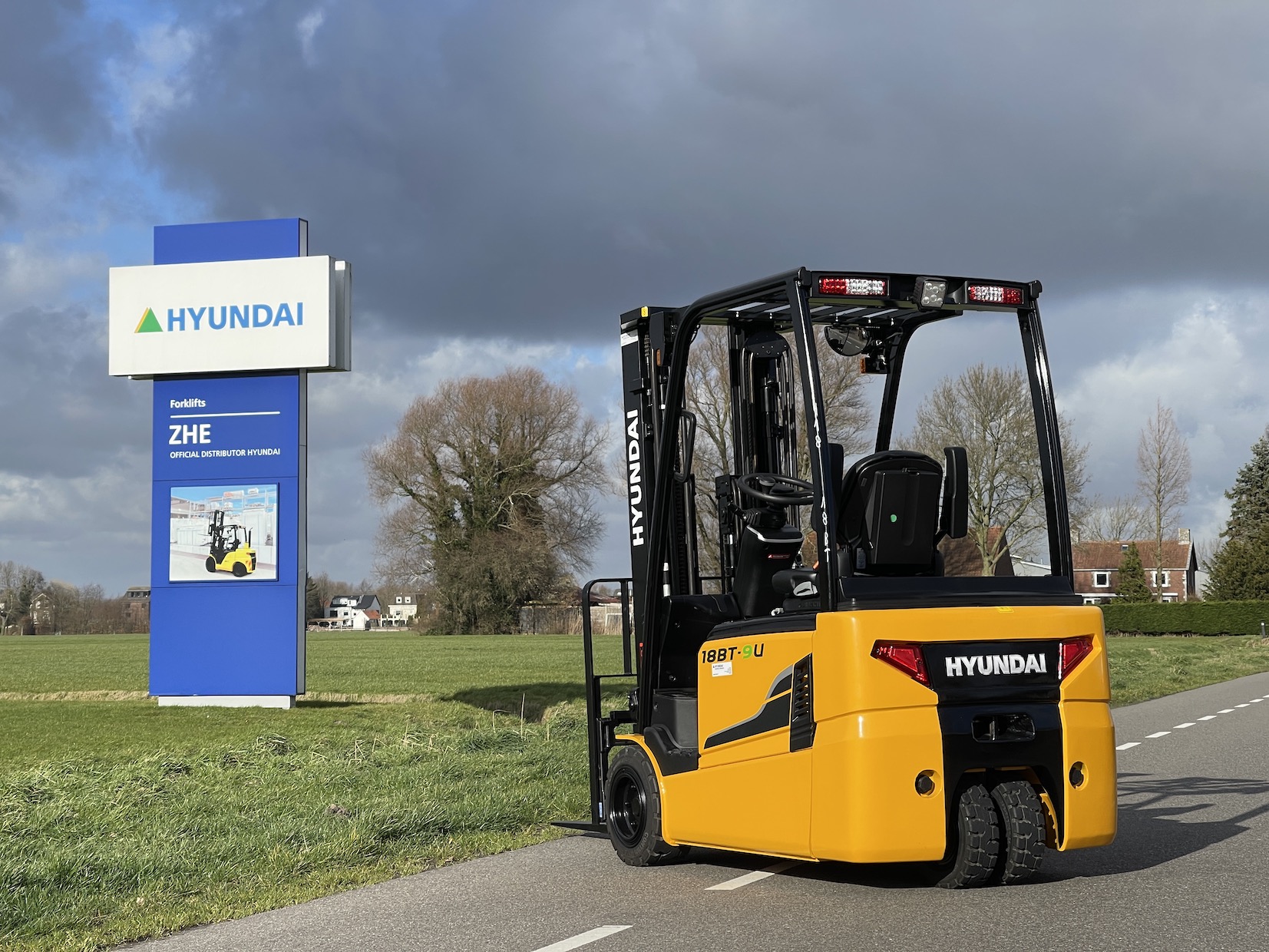
You often see it in requests: “We have a 2.5 ton forklift needed.” But whether that’s actually true depends on one detail that is often forgotten: the last center (last center). Below, we will explain it clearly, with examples you can apply directly.
The last center is the fork back distance to the center of gravity of the charge. Many forklifts are “called” on 500 mm center of last. If your load protrudes further forward (e.g., 800–1,000 mm due to long pallets, crates, or extended forks), then does the maximum safe lifting capacity decrease.
Tip In your request, do not just provide the weight, but also dimensions and how the load rests on the forks. Then we can recommend a forklift that remains safe and stable in practice.
The load center is: how far the center of gravity of your load is in front of the fork back.With a standard pallet load, the center of gravity is often approximately in the middle of the pallet. That is why you very often see a nominal value of c = 500 mm.
Forklifts are “rated” on a combination of factors: lift height, mast type, tires, attachments, and the load center. Therefore, the same forklift can have a larger load center lift fewer kilos safely.
Therefore, when we give advice, we often ask: “What is the weight and what are the dimensions?” This is how to prevent a truck from appearing to be within limits on paper but turning out to be underweight on location.
Think of a seesaw: the further a weight is from the pivot point, the greater the tilting moment. The same happens with a forklift: if the load is further forward, the lifting moment increases. This reduces the maximum safe lifting capacity.
Important: always assume nameplate / load diagram of the specific forklift. Rules of thumb help, but the nameplate is decisive.
A useful indication: lifting capacity is roughly inversely proportional to the load center. If the load center increases, the safe lifting capacity can significantly decrease.
| Situation | Lastcentrum (c) | What you often think | What can happen in practice |
|---|---|---|---|
| 2.5 ton forklift (nominal) | 500 mm | “Good for 2,500 kg” | That's correct, if your center of gravity is around 500 mm |
| Same truck, load is further forward | 1.000 mm | “Still 2,500 kg” | Indication: much lower permissible lifting capacity (depending on mast/height/version) |
Please note: mast type, lift height, tires, and attachments make a big difference in reality.
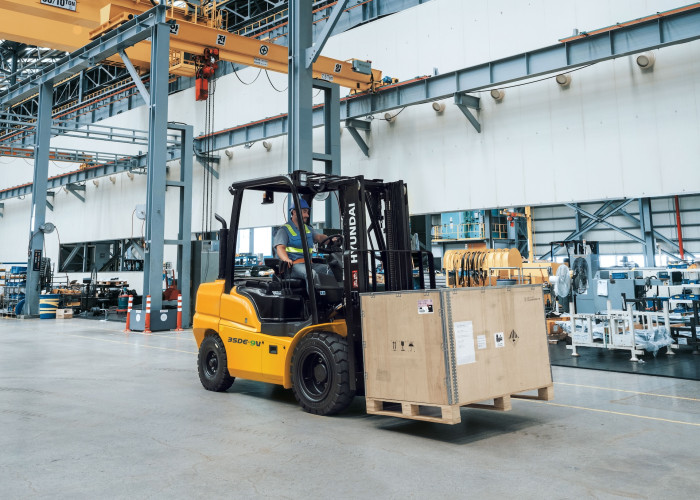
Meet (or estimate) the distance from the around until center of gravity.At 1200 mm pallet length, the center is at 600 mm. With goods protruding, you quickly reach 700–1000 mm.
Attachments are useful (side shifter, fork positioner, rotator, clamp, tilt bucket), but often affect the effective load center and net lifting capacity. Also extension spoons bring the load further forward.
Advice always pass on whether you are working with (or want to work with) pre-equipment. Then we will adjust the truck and configuration accordingly.
More info: rental equipment.
On the nameplate or load chart, you will see the safe lifting capacity for combinations of headline, mast en last center.
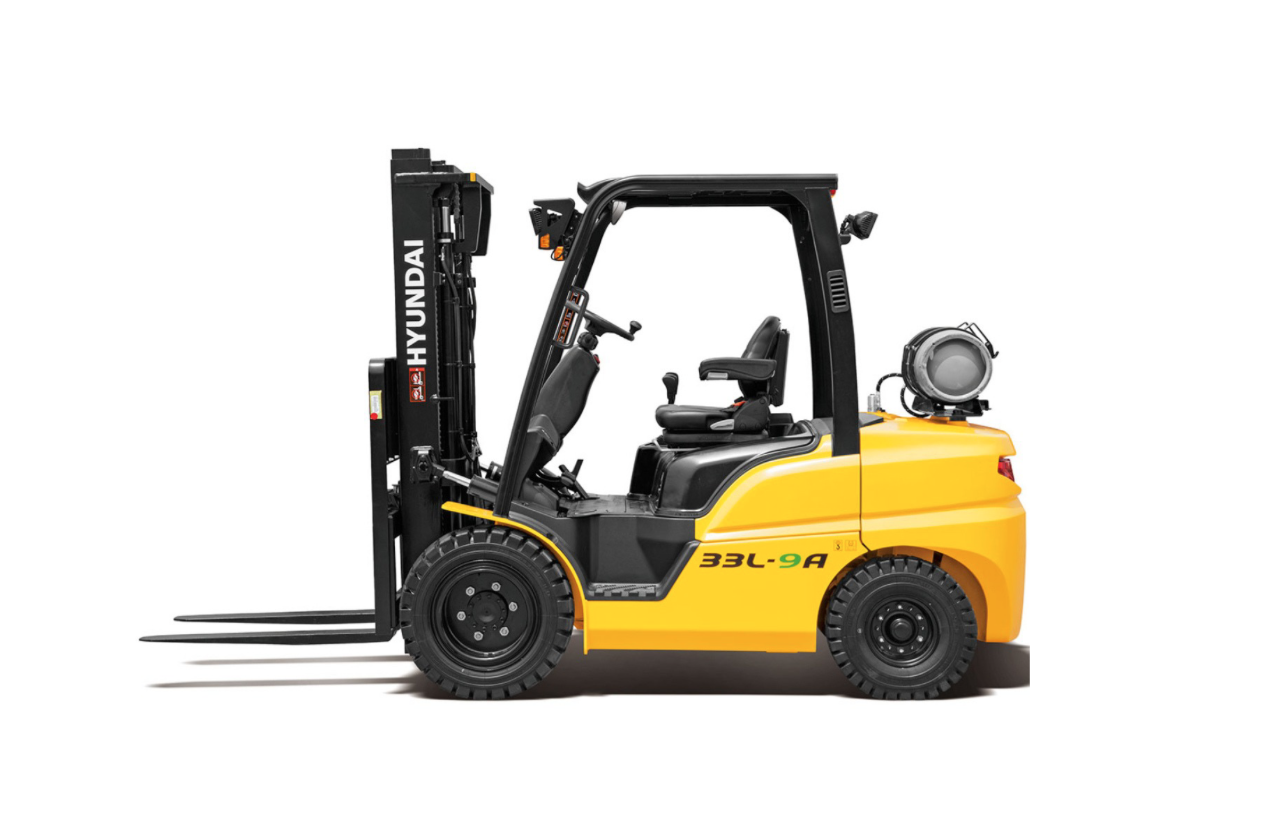
With this information, we can recommend the right forklift in one go:
Result: less risk, less downtime, and immediate correct deployment on site.